How to Self-Publish Your First Christian Devotional on Amazon KDP

Some books get read once and passed along. A devotional gets read every morning before the coffee gets cold.
That is not an accident. A well-crafted devotional becomes a companion — something a reader returns to in the quiet before the day starts, in the hard seasons, in the ordinary ones. I have a copy of Rick Renner’s Sparkling Gems from the Greek that I have read through more than once. Same with J. Stephen Lang’s The Christian History Devotional. Those books did not just inform me. They shaped the way I think about Scripture. That is what a devotional can do in the right hands.
Your hands may be the right ones.
Maybe you have been sitting on a theme for years. Maybe God keeps bringing you back to the same passage, the same lesson, the same truth you had to learn the hard way. Maybe someone has told you more than once that you should write this down. A devotional is how you write it down — in a form that meets a reader exactly where they are, one day at a time.
Amazon KDP has made it possible for any author to get that book into the world without a publishing contract, a literary agent, or a budget that requires a second mortgage. What it does require is a clear plan, a little patience, and a willingness to see the work through.
That is what this guide is for.
So before we talk file formats and royalty rates, let’s start with the question that matters most: how will yours speak to them?
In This Guide
- What Makes a Devotional Different
- Define Your Focus and Audience First
- How to Structure Each Entry: The Hook, Book, Look, and Took Method
- Writing and Organizing Your Manuscript
- Common Pitfalls to Avoid
- Formatting Your Devotional for KDP
- Cover Design for Devotionals
- Setting Up Your KDP Account and Uploading
- Pricing and Royalties
- After You Publish
What Makes a Devotional Different

Before you write a single word, it helps to know exactly what you are building.
A devotional is not a Bible study. It is not a memoir. It is not a collection of sermons with a ribbon marker stuck in the middle. It occupies its own lane — and once you understand that lane, everything else gets easier.
At its core, a devotional is a short, focused entry designed for brief, deep reading. Not a quick skim. Not a chapter-length commitment. A devotional asks for maybe five or ten minutes of a reader’s morning, and in return, it offers one complete thought, one moment with Scripture, and one thing to carry into the day.
That constraint is actually a gift. You are not trying to say everything. You are trying to say one thing, well.
Most devotional books contain anywhere from 30 to 365 individual entries. A 30-day devotional works beautifully as a focused topical study: grief, anxiety, identity in Christ, and perseverance through a hard season. A 365-day devotional becomes a year-long companion, the kind that lives on a nightstand and gets dog-eared and underlined until the spine gives out. Both are valid. Both serve readers well. The format you choose depends on your theme, your audience, and, honestly, how much you have to say.
Each entry typically runs between 150 and 500 words. That range is wider than it sounds. A 150-word entry is tight and punchy, almost poetic. A 500-word entry has room to breathe, to tell a short story, to let a truth land with some weight behind it. Most writers find their natural length somewhere in the middle and stay consistent, which is exactly what you want. Consistency helps your reader build a habit, and building a habit is the whole point.
This is also what makes the devotional format one of the most manageable first books a faith-based author can write. You are not staring down 80,000 words. You are writing one entry at a time, one complete thought at a time, until the book is done. For a writer who has never finished a book before, that structure is not a limitation. It is a lifeline.
Define Your Focus and Audience First
Before you write your first entry, you need to answer three questions. Who is this for, what is it about, and what makes yours worth reading when there are already ten thousand devotionals on Amazon?
Who are you writing for? Get specific. Not “Christian women” but “Christian women in their fifties who are navigating an empty nest and wondering what comes next.” Not “men who want to grow spiritually” but “men in recovery who are learning to trust God with the parts of their story they are most ashamed of.” The more clearly you can picture your reader, the more directly you can speak to them. A devotional that tries to reach everyone usually reaches no one.
What is it about? Choose a theme and stay inside it. Peace. Grief. Identity in Christ. Perseverance. Gratitude. Anxiety. Hearing God’s voice. Your theme is the thread that runs through every entry and holds the book together. Readers pick up a devotional because something in their life is calling for exactly what your theme addresses. Make sure every entry answers that call.
What makes yours different? This is the harder question, and it deserves an honest answer. There are a lot of devotionals out there. What fresh insight are you bringing to an eternal truth? That does not mean your theme has to be exotic or your angle has to be clever. It means your voice, your stories, and your particular experience of God’s faithfulness are things no one else can bring to the page. That is your angle. Lean into it.
Which format fits your vision? Once you know your who and your what, you can choose your format.
- A 365-day devotional is a year-long commitment for the reader and a significant writing project for you. It works best for broad, evergreen themes.
- A 30-day topical study is focused and accessible. Readers know exactly what they are getting into, and the shorter runway makes it easier to market and easier to finish.
- A 6-week small group format adds a community dimension. Each week builds on the last, and entries are written with discussion in mind.
One practical note worth making early: your format choice affects your page count, and your page count affects the width of your book’s spine, which affects your cover design. It sounds like a small detail until you are uploading files and realizing the numbers do not match. Decide your format before you start, and your designer will thank you. So will your future self.
“A devotional that tries to reach everyone usually reaches no one. The more clearly you can picture your reader, the more directly you can speak to them.”
How to Structure Each Entry: The Hook, Book, Look, and Took Method

You can have a great theme, a clear audience, and a genuine calling to write this book, and still stare at a blank page every morning, wondering how to actually begin an entry. That is where structure saves you.
One of the most effective frameworks for writing devotional entries comes from Christian Devotions Ministries and is based on four simple words: Hook, Book, Look, and Took. Once you understand it, you will see it everywhere. More importantly, you will be able to use it to write entries that feel complete, focused, and worth a reader’s five minutes.
Here is how it works.
THE HOOK is your opening, and it has one job: pull the reader in. A strong hook is almost always a story — a specific moment, a concrete detail, something that happened in a real place at a real time. Not “I have always struggled with worry” but “I was sitting in a hospital waiting room at two in the morning, watching a clock that did not seem to be moving, and I had completely run out of prayers.” That is a hook. It puts the reader in the room with you. It makes them want to know what happened next. The hook does not have to be dramatic. It just has to be real.
THE BOOK is where you bring in Scripture. Once you have the reader’s attention, you connect your opening story to a biblical principle. A verse, a passage, a truth from God’s Word that speaks directly to what your hook just set up. This is the theological anchor of the entry — the place where your personal story meets eternal truth. Keep it focused. One or two verses are almost always enough. This is not the place for a word study or a survey of commentaries. It is the place where the reader sees that what you just described, God already addressed.
THE LOOK is where you broaden the lens. You move from your specific story to the universal application. What does this truth mean for the reader sitting across from you? How does it show up on an ordinary Tuesday, in a difficult marriage, in a season of waiting, in a moment of doubt? The Look is where the devotional stops being about you and starts being about them. It is the bridge between your experience and theirs, and where many devotional writers do their best work.
THE TOOK is your closing, and it should give the reader something to carry into the day. A prayer. A reflection question. A simple action step. Something concrete enough that they can hold onto it after they close the book and pour their second cup of coffee. The Took does not need to be long. It needs to be useful.
A practical tip worth keeping in mind: many experienced devotional writers start with the Scripture first. Find the verse that anchors the entry, then work backward to find the story that brings it to life. The framework is a proven starting point, not a rigid formula. As you develop your voice, you will find where you can loosen it and where the structure is actually serving your reader. Trust the process long enough to learn where it fits you.
Writing and Organizing Your Manuscript
There is a temptation, once you have your framework and your outline, to treat devotional writing like content production. Schedule the entries, hit the word count, move on. Resist that. The readers who will return to your book year after year are not responding to content. They are responding to someone who clearly spent real time with God before they spent time at the keyboard.
Start from your own quiet time. The best devotional entries grow out of genuine study and prayer, not a content calendar. When something in Scripture stops you: when a verse lands differently than it did before, when a story from your own life suddenly connects to something God has been trying to teach you. Write it down. That is the raw material of a devotional worth reading. A reader can tell the difference between a writer who discovered something and a writer who produced something, and so can you.
Write vulnerably. This is the part that makes many writers uncomfortable, and it is also the part that makes a devotional stick. Your struggles are not liabilities. The season you barely survived, the prayer that felt like it went nowhere, the moment God showed up in a way you did not expect. Those are the stories that make a reader feel less alone. You do not have to share everything. But share enough to make it real.
Use concrete, vivid imagery. Abstract writing is the enemy of a good devotional. Do not tell the reader that God’s peace surpasses understanding and leave it there. Show them what peace looked like in a specific moment, in a specific place, with specific details they can see and feel. The smell of coffee. The way the light came through the window. The particular weight of a phone call you did not want to make. Concrete details are what make a reader lean in instead of skim.
Keep a single focus per entry. One point, made well, is worth more than three points made thinly. Every entry should be able to answer the question: What is the one thing I want this reader to walk away with today? If you cannot answer that in a single sentence, the entry probably needs to be tightened. This is not a limitation on your thinking. It is a gift to your reader.
A reader can tell the difference between a writer who discovered something and a writer who produced something. And so can you.
Organizing the book. Once you have a collection of entries, you need a structure that holds them together. There are a few approaches that work well.
- By theme: Group entries around related ideas. Anxiety in week one, peace in week two, trust in week three. This works well for topical devotionals and gives the book a natural progression.
- By Scripture: Work through a book of the Bible, a psalm, or a specific passage over the course of the devotional. This approach gives the book a strong theological spine.
- By calendar: Advent, Lent, a new year, or a specific season of life. Calendar-based devotionals have a built-in marketing hook and a natural gift-giving moment.
Whatever structure you choose, each entry should stand completely on its own while still connecting to the larger theme of the book. A reader who opens to day 47 on a random Wednesday should get a complete thought, not a reference to something they missed on day 46.
A word on tools. Scrivener is an excellent option for organizing a devotional manuscript. You can keep each entry in its own document, move them around easily, and see the whole book at a glance. I use it daily to organize all of my writing and most of my business files. If Scrivener feels like more than you need, a well-organized Word document or Google Doc works just as well. The tool matters far less than the habit. Write consistently, in whatever environment helps you focus, and the manuscript will come together.
Common Pitfalls to Avoid
Being preachy. This is the most common one, and it is also the easiest to fall into without noticing. There is a difference between a writer who has walked through something and wants to share what they learned, and a writer who has figured something out and wants to make sure you know it. Readers feel that difference immediately. Come to the page as a fellow traveler, not an authority issuing corrections from a podium. The moment a reader feels lectured, they stop feeling invited. And a devotional that does not invite the reader in has missed the whole point.
Cramming too many topics into one entry. You have a lot to say. That is a good thing. Save it. A devotional entry is not the place to cover every angle of a topic, address every objection, and tie it all up with a theological bow. Pick one thing, say it well, and trust the reader to sit with it. The entries that try to do too much end up doing nothing particularly well. If you find yourself writing transitions like “and another thing to consider is,” that is a signal to stop and save the second thought for tomorrow.
Letting your story bury the Scripture. Personal stories are powerful. They are also the part that comes most naturally to most writers, which means they have a tendency to take over. A devotional entry in which the story runs for four paragraphs and the Scripture gets only one sentence at the end has its priorities backward. The Word is the anchor. Your story is the rope that helps the reader reach it. Keep that order in mind as you write and edit.
Inconsistent entry length or structure. Readers who come back to a devotional day after day are building a habit, and habits depend on predictability. If some entries run 150 words and others run 600, if some have a closing prayer and others just stop, the inconsistency breaks the rhythm you are trying to create. Settle on a structure and a general length range early, and hold to it. You do not have to be mechanical about it, but your reader should know roughly what to expect when they sit down each morning.
Skipping the editing pass. Devotionals are short. That is exactly why every word has to earn its place. A 300-word entry has no room for filler, for repeated ideas, for sentences that sound good but do not actually say anything. Read each entry out loud before you consider it finished. If you stumble over a sentence, rewrite it. If a paragraph could be cut without losing anything, cut it. Brevity in a devotional is not a constraint. It is the craft.
Formatting Your Devotional for KDP
You have written the entries, organized the manuscript, and survived the editing pass. Now comes the part that makes a lot of authors quietly panic: formatting the interior for print.
It does not have to be complicated. But it does have to be right, because a poorly formatted interior is the fastest way to make a self-published book look self-published in the worst sense of the word. Readers may not be able to name what is wrong, but they will feel it every time they turn a page.
Choose your trim size first. For devotionals, the two most common trim sizes are 5×8 and 5.5×8.5. Both feel comfortable in the hand, sit naturally on a nightstand, and are well within KDP’s standard printing options. A 5×8 tends to feel a little more intimate and personal. A 5.5×8.5 gives you slightly more breathing room on the page, which can be helpful if your entries run toward the longer end of the range. Either works. Just choose before you start formatting, because changing trim size after the fact means reformatting the entire manuscript.
Interior layout basics. A clean devotional interior has a few consistent elements that repeat across every entry.
- Entry headers: Each day or entry needs a clear, consistent header. Day number, title, or both. Whatever you choose, keep it identical in format from entry to entry.
- Scripture styling: Set your key verse apart from the body text. Italics, a slightly different indent, or a distinct typographic treatment all work. The reader’s eye should land on the Scripture immediately.
- White space: Do not be afraid of it. A page that is too dense feels heavy before the reader even starts reading. Margins, line spacing, and the space between sections all contribute to a reading experience that feels calm and unhurried, which is exactly the tone a devotional should carry.
- Closing elements: If every entry ends with a prayer or a reflection question, give it a consistent visual treatment. A simple rule line, a small ornament, or just a consistent label like “Today’s Prayer” or “Reflect” is enough.
Font choices. Stick with readable, professional body fonts. Georgia, Garamond, and Palatino are all strong choices for devotional interiors. Set your body text between 11 and 12 points with a line height that gives the reader room to breathe. Save decorative or script fonts for headers and accents only, and use them sparingly. A font that looks beautiful on a cover can become exhausting as body text across 200 pages.
KDP file requirements. KDP accepts manuscript files in PDF or Word format. PDF is generally the safer choice because it preserves your formatting exactly as you built it. Word documents can shift depending on the version KDP processes them in. Embed all fonts before you export, set your margins according to KDP’s guidelines for your trim size and page count, and account for bleed on any pages that have full-width design elements.
Before you upload anything, download KDP’s manuscript template for your chosen trim size. It is free, it takes the guesswork out of margin settings, and it will save you at least one round of frustrated revisions.
Use the previewer. Once you upload your manuscript, KDP’s online previewer shows you exactly how the printed book will look page by page. Use it. Scroll through every page before you approve the file. Look for widows and orphans, check that your headers are consistent, make sure your Scripture styling held, and verify that nothing shifted in the upload. The previewer is not glamorous, but catching a formatting issue there is a lot better than catching it in a proof copy you paid to ship to your front door.
Interior formatting is one of those things that looks simple until you are two hours into adjusting margins and wondering why your page numbers keep moving. If the technical side is not where you want to spend your time, a professional interior layout is one of the most worthwhile investments a self-publishing author can make. Your words deserve a page that presents them well.
Cover Design for Devotionals

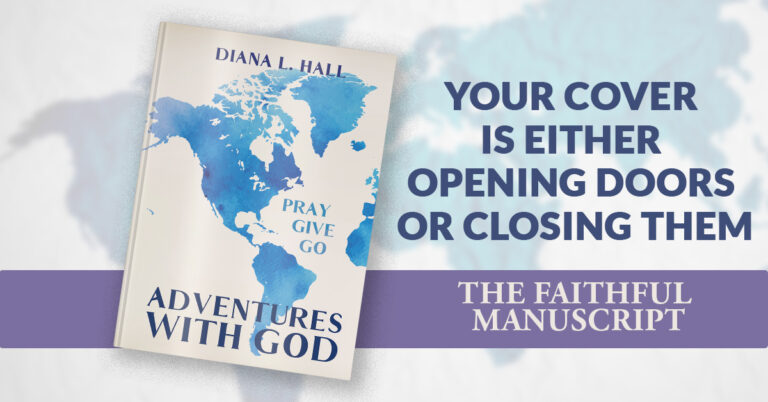
If the interior is what your reader lives inside, the cover is what convinces them to open the door. And on Amazon, that decision happens in about two seconds, on a thumbnail the size of a postage stamp, while your book is competing with every other devotional in the category.
No pressure.
Devotional covers have their own visual language, and it is worth understanding before you start making decisions. Spend ten minutes browsing the devotional category on Amazon and you will notice patterns quickly. Soft, warm color palettes. Natural imagery — light through trees, open fields, still water, hands cupped around a mug. Generous white space. Clean, readable typography. There is a reason these elements show up again and again. They signal to the reader, before they read a single word, that this book is a quiet place. An invitation. Something worth slowing down for.
That does not mean every devotional cover has to look the same. It means you need to understand the visual expectations of your audience before you decide where to diverge from them.
Want to go deeper on cover design specifically? Our full guide on designing a Christian book cover picks up exactly where this section leaves off.
What works at thumbnail size. This is the test that matters most for Amazon sales. Pull up your cover at the size it will actually appear in search results — roughly one inch tall on most screens — and ask yourself whether the title is still readable, whether the image still communicates something, and whether the overall impression is one of quality. Covers that look beautiful at full size can become muddy and unreadable at thumbnail. Strong contrast, a clean focal point, and a title set in a bold, readable font are what survive the shrink.
What to avoid.
- Overly busy layouts with too many competing elements
- Script or decorative fonts that lose legibility at small sizes
- Generic stock photography that looks identical to a dozen other devotionals in the same category
- Dark, heavy color palettes that feel inconsistent with the devotional tone
- Trying to include too much text on the front cover — your title, subtitle, and author name are enough
The back cover matters too. A lot of authors pour everything into the front cover and treat the back as an afterthought. Your back cover is prime real estate. It needs a strong book description that speaks directly to your reader’s need, a brief author bio that establishes credibility without being stiff, and enough white space that it does not feel like a wall of text. If you have endorsements, this is where they go. If you have awards or notable reviews, this is where you display them. And your barcode and ISBN live in the lower right corner, which your designer will handle.
A cover that works on a bookstore shelf at noon and an Amazon page at midnight does not happen by accident. It is the result of understanding your reader, understanding the market, and making intentional decisions about every element on the page. If cover design is not in your skill set, it is one of the most worthwhile places to bring in a professional. A strong cover is not a luxury for a self-published book. It is the cost of being taken seriously.
“A strong cover is not a luxury for a self-published book. It is the cost of being taken seriously.”
Setting Up Your KDP Account and Uploading
This is the part that feels more intimidating than it actually is. Amazon has put a lot of work into making KDP accessible to authors who have never published before, and once you have been through the process, it no longer feels mysterious.
Before you log in, gather everything you need. Nothing slows down the upload process like stopping halfway through to hunt for a file or rewrite a book description from scratch. Before you sit down to set up your title, have the following ready:
- Your formatted manuscript file, exported as a PDF
- Your cover file, built to KDP’s specifications for your trim size and page count
- Your book title and subtitle, finalized
- Your author name exactly as you want it to appear on the cover and in search results
- A book description of 150 to 400 words written for your reader, not for you
- A short author bio in third person
- Your pricing decision for both print and ebook if you are publishing both
- Seven keywords you want associated with your book in Amazon search
- Two category selections
KDP will assign you a free ISBN if you do not have one. That ISBN is exclusive to Amazon, which is fine if you are publishing exclusively through KDP. If you plan to distribute through IngramSpark as well, you will want your own ISBN. You can purchase one through Bowker at myidentifiers.com.
Create your KDP account. Go to kdp.amazon.com and sign in with your existing Amazon account or create a new one. Complete your account details including your tax information and your payment method before you try to publish anything. KDP will not let you move forward without them, and it is easier to handle it at the start than to hit that wall mid-upload.
Create a new title. From your KDP Bookshelf, click the button to add a new title. You will be asked whether you are publishing a paperback, hardcover, or Kindle ebook. Most authors publishing a devotional will want, at a minimum, a paperback and a Kindle edition. You can set these up separately, and KDP will automatically link them on your Amazon product page.
Fill in your title details. Work through the fields carefully. Your title and subtitle need to match your cover exactly, including capitalization and punctuation. Your book description is essentially your sales page — write it for the reader who is on the fence, speak directly to the need your devotional addresses, and end with a reason to buy today rather than someday. Your keywords should reflect how your specific reader would actually search for a book like yours. Think in phrases, not single words. “Daily devotional for women in grief” will serve you better than “devotional” or “grief.”
Upload your manuscript. Once your title details are complete, you will upload your manuscript file. KDP will process it and run an automated check for formatting issues. After processing, open the previewer and go through every page. Do not skip this step. The previewer is where you catch problems before they become printed problems, and printed problems cost both time and money to fix.
Upload your cover. If you have a print-ready cover file built to KDP’s specifications, upload it here. KDP also has a basic cover creator tool built into the platform, but for a devotional where visual presentation matters, a professionally designed cover file is always the better choice.
Set your pricing. For print, KDP will show you the minimum price you can charge based on your page count and trim size after their printing cost is subtracted. Set your price above that minimum with enough margin to actually earn a royalty worth having. For Kindle, select your royalty rate — 70 percent for books priced between $2.99 and $9.99, 35 percent outside that range — and KDP will show you your estimated royalty per sale in real time as you adjust the number.
Submit for review. Once everything is uploaded and reviewed, submit your title for publishing. KDP typically takes 24 to 72 hours to review and approve a new title before it goes live on Amazon. Use that window to prepare your launch push, not to refresh your KDP dashboard every twenty minutes. It will go live when it goes live.
Pricing and Royalties
Pricing a book you wrote feels strangely personal. It should not, but it does. There is a tendency among first-time authors to underprice out of uncertainty, as if charging less somehow makes the book easier to say yes to or softens the risk of putting it out into the world. Here is the honest truth: a book priced too low does not signal humility. It signals doubt. Price your devotional with confidence.
How KDP royalties work for print. Print royalties on KDP work differently than ebook royalties, and it is worth understanding the math before you set your price. Amazon prints each copy on demand when a reader orders it, and they subtract the printing cost from your list price before calculating your royalty. Your royalty on a print book is 60 percent of the list price minus the printing cost.
That means if your devotional has a printing cost of $4.50 and you price it at $14.99, your royalty per sale is roughly $4.49. If you price it at $9.99, your royalty drops to $1.49. The printing cost stays fixed regardless of what you charge, so pricing too low compresses your margin fast. KDP will show you the printing cost for your specific page count and trim size when you set up your title. Use that number to work backward to a price that makes sense.
How KDP royalties work for Kindle. Ebook royalties are more straightforward. KDP offers two royalty tiers.
- 70 percent for books priced between $2.99 and $9.99, available in most major markets
- 35 percent for books priced below $2.99 or above $9.99
For a devotional ebook, the $3.99 to $6.99 range tends to be the sweet spot. It sits comfortably in the 70 percent tier, it is low enough that price is not a barrier for a reader who is already interested, and it is high enough that you are not giving the work away.
What devotionals typically cost. In print, most devotionals in the Christian market range from $12.99 to $16.99. A 30-day topical study at the lower end of the page-count range might be closer to $10.99 or $11.99. A 365-day devotional with a higher page count and a strong production quality can comfortably hold $15.99 or $16.99. Look at comparable titles in your category on Amazon, note their prices, and position yourself within that range rather than below it. Pricing below the market does not help you sell more books. It just makes readers wonder what is different about yours.
A note on Kindle Unlimited. When you enroll your Kindle edition in KDP Select, your ebook becomes available to Kindle Unlimited subscribers, who can read it as part of their membership. You earn a per-page-read royalty rather than a per-sale royalty. For devotionals, which tend to be read in short daily sessions rather than consumed in one sitting, Kindle Unlimited can actually work in your favor since readers return to the book repeatedly and pages accumulate over time. It does require exclusivity — you cannot sell the ebook elsewhere while enrolled — so weigh that tradeoff against your distribution goals.
The bottom line. Do the math, look at the market, and set a price that reflects the value of what you created. You spent real time in Scripture, in prayer, and at the keyboard to write something that could genuinely help a reader through a hard season or a quiet one. Charge accordingly.
After You Publish
Hitting the publish button is not the finish line. For a lot of first-time authors, it feels like one —and that is understandable—getting the book done and uploaded is a real accomplishment, and it deserves a moment of acknowledgment. But readers who need your devotional won’t find it on their own. That part is on you, and it starts the moment your title goes live.
Get your categories right. During the upload process, KDP asks you to select two categories for your book. Choose them carefully, because categories determine where your book appears in Amazon’s browse structure and which bestseller lists you are eligible for. Look for categories that are specific enough to be winnable but broad enough to have real traffic. “Christian Devotional” is broad. “Christian Devotional for Women” is more specific. “Christian Devotional for Women in Grief” is where a book with a focused audience can actually compete.
Here is something most first-time authors do not know: you can request additional categories beyond the two you selected at upload by contacting KDP support directly. You can have up to 10 categories per title. It takes a simple email and a few days of patience, and it is one of the easiest ways to expand your book’s visibility on Amazon.
Use all seven keywords. KDP gives you seven keyword fields, and a lot of authors treat them as an afterthought. Do not. These keywords feed directly into Amazon’s search algorithm and determine whether your book surfaces when someone is looking for exactly what you wrote. Use all seven slots, and think in phrases rather than single words. Your reader is not typing “devotional” into the search bar. They are typing “daily devotional for women going through divorce” or “Christian devotional for men in recovery.” Write your keywords the way your reader searches.
A few approaches that work well:
- Phrases that describe your specific reader and their situation
- Phrases that reflect the theme or topic of the devotional
- Phrases that include the format, such as “30 day devotional” or “365 day Bible devotional”
- Phrases your comparable titles are ranking for
Get early reviews. Reviews are the currency of Amazon. A book with no reviews is invisible to a reader who does not already know your name. Getting your first handful of reviews before or immediately after launch is one of the most important things you can do for your book’s long-term visibility.
The most reliable way to get early reviews is to build a small launch team before your book goes live. Reach out to people in your community, your church, your existing email list, or your social following who would genuinely read and benefit from your devotional. Give them an advance copy in exchange for an honest review posted on Amazon after launch day. Ten to fifteen early reviews change how a new title is perceived by every reader who finds it afterward.
A few things to keep in mind about Amazon’s review policies: reviewers cannot be immediate family members, and you cannot offer compensation in exchange for a positive review. An honest review from a real reader is worth more than a five-star review from someone who never opened the book, and Amazon has gotten quite good at identifying the difference.
Do not publish and disappear. This is the mistake that costs authors the most and is also the most preventable. A launch push does not require a massive platform or a marketing budget. It requires showing up where your readers already are and telling them the book exists.
Send an email to your list the day your book goes live. Post about it on whatever social platforms you are already using. Share it in the communities where your specific reader spends time — Facebook groups, church networks, online communities built around your theme. If you have a blog, write about it. If you have a podcast, mention it. If you know someone with an audience that overlaps with yours, ask if they would be willing to share it.
The window right after launch matters more than most authors realize. Amazon’s algorithm pays attention to early sales velocity. A strong first week signals to the algorithm that this book is worth showing to more people and that momentum can carry a title for months.
You wrote something worth reading. Make sure the people who need it can find it.
Ready to Get Your Devotional into the World?
If you have made it this far, you are not someone who is casually curious about self-publishing. You are someone with something to say, a reader who needs to hear it, and now a clear path to bringing the two of you into the same room.
That is not a small thing.
Writing a devotional is an act of obedience as much as it is a creative project. You are taking what God has taught you, often through seasons you would not have chosen, and offering it to someone who may be standing in the middle of that same season right now. The five minutes they spend with your book on an ordinary Tuesday morning might be exactly what they need to take the next step. You do not get to know that in advance. You just have to write the book and trust what happens after.
So write the book.
And when you are ready to think about how it looks, the cover that stops a reader mid-scroll, the interior layout that makes every page feel like it was designed for quiet reading…that is where I come in. I have spent nearly thirty years helping authors put their words into a form that does them justice. I work specifically with independent authors and small publishers who care deeply about the quality of what they are putting into the world, and I would be glad to help you get there.
If you are not sure where to start, grab the free Self-Publishing Checklist for Christian Authors below. It walks you through every step of the process from manuscript to published book, and it is a good companion to everything you just read. If you are further along and ready to talk about cover or interior layout, book a free consultation. We will talk through your project, your timeline, and what it would take to give your devotional the presentation it deserves.
Your readers are waiting. Let’s get this done.
And if you are ready to talk through what your specific cover needs, the calendar is open at my studio. Find out how to work with me here.